The question. A product team needed 60 plastic housings for a pilot launch and assumed injection molding was the professional choice. The tooling quote alone exceeded their entire pilot budget.
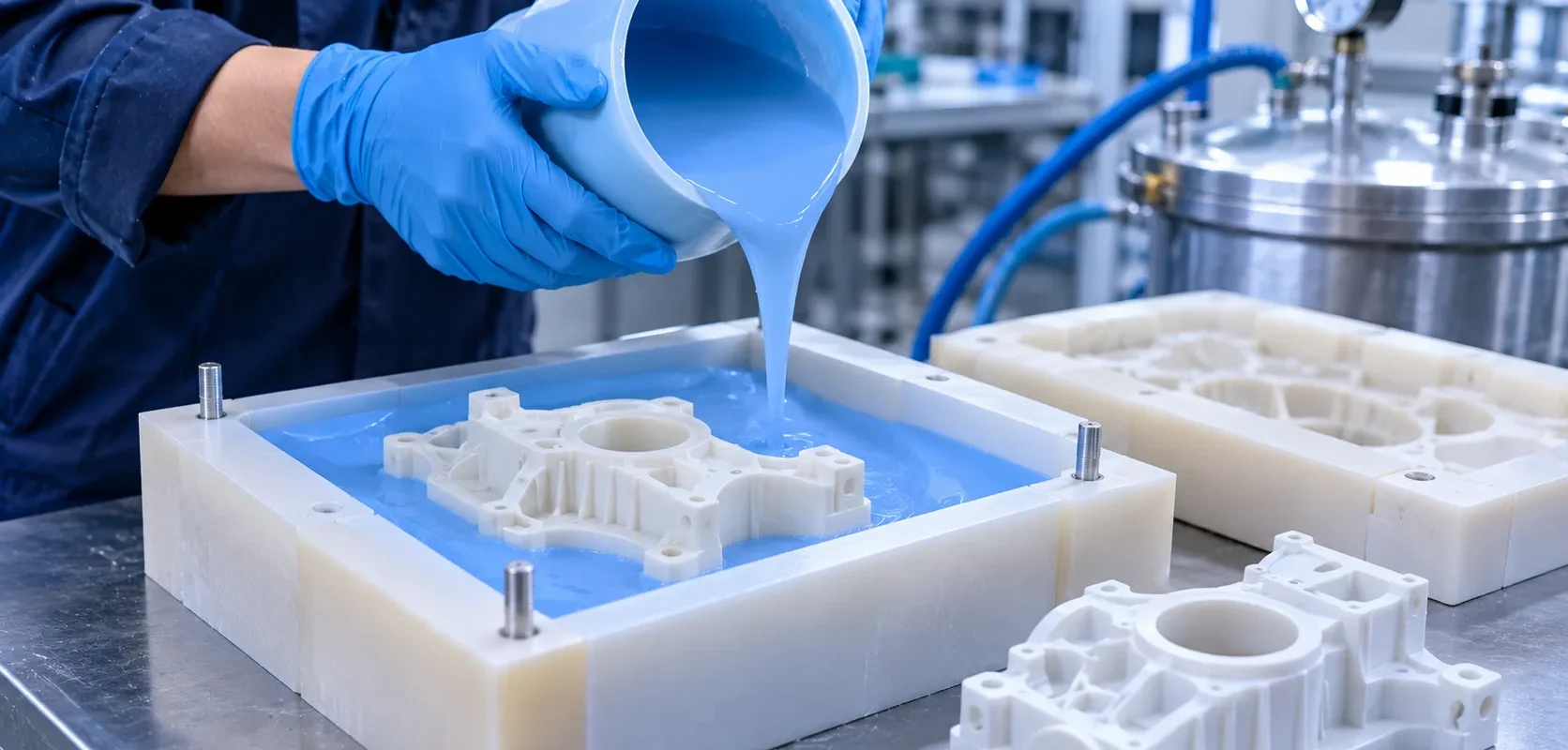
The comparison. Vacuum casting needs a master pattern and a silicone mold — a small fraction of steel tooling cost — and produces polyurethane parts that closely mimic molded ABS in look and function. The mold yields roughly 20–25 parts before renewal, so per-part cost stays flat and predictable at low volumes. Injection molding inverts the economics: high fixed tooling cost, very low per-part cost.
The crossover. For most housings of this size, vacuum casting wins clearly below a few hundred parts; molding takes over once volumes pass the high hundreds and the tooling amortizes. The honest answer depends on part size, material and expected lifetime volume — which is why our engineers run both numbers on request.
The outcome. The pilot launched on vacuum-cast parts in weeks, the product was validated with real users, and the production tool was cut later — sized correctly for proven demand. See our vacuum casting and injection molding pages for both processes.