Should a component be turned or milled? Is 3-axis machining sufficient, or does the project require 5-axis? Okay, a wrong selection of the CNC machining process may result in costly delays, tolerances, or excess spending. In this CNC machining processes comparison, we will describe each major method along with a concise overview in a clear, practical manner.
Hopefully, this will help in making decisions that are cost-effective and tailored to project specifics. So, let’s dive in!
CNC Manufacturing Process Overview
“CNC machining processes refer to a set of manufacturing processes which involve the removal of material from a piece in order to shape a certain part.”
Each of these processes is managed with the help of a computer, which aids in moving the tools with pinpoint precision. This is the reason why CNC stands for Computer Numerical Control. In contrast with 3D printing, it is a subtractive manufacturing method, meaning more material is used than needed initially, and the excess is gradually removed in order to reveal the desired shape.
Well, this method is prevalent, especially in industries like manufacturing, due to its exceptional accuracy and consistency.
Why Are There So Many Different Types of Processes?
This is a question that comes to the mind of numerous design and engineering professionals. The answer is rather straightforward: Every component differs. Some might have holes and curves, while others might need to have smooth finishes or sharp edges. Therefore, there is no single approach that can be used for all shapes, sizes, and materials.
To address all of these requirements, different processes have emerged. Each of them caters to a specific task, be it cutting metal blocks, shaping cylinders, or surface finishing.
In this blog, we will explain the different types of processes so that you can have a better perspective of them. First, let’s have a quick look at each.
Milling-Based Processes
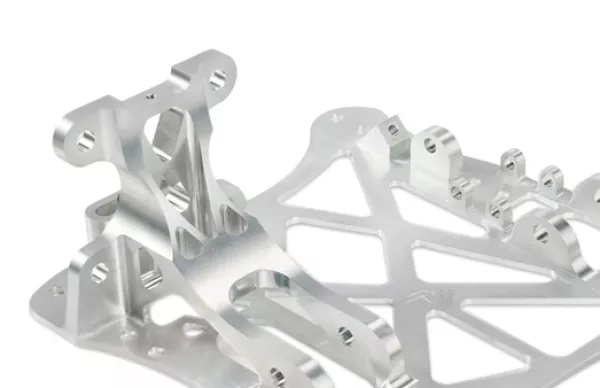
With CNC milling, the workpiece remains stationary while the cutting tool rotates and extracts material as though it were peeling off layers. This approach is optimal for components that have flat surfaces, slots or pockets.
This process is often used for design and other engineering components that require holes, angles, and intricate 3-dimensional shapes. Well, CNC milling is a precise and flexible process that works with metals and plastics.