Efficient CNC turning solutions with fast lead times and competitive pricing—perfect for everything from rapid prototypes to full production runs.
Get high-quality CNC-turned parts with the exact features and precision your project requires.
Custom CNC-turned prototypes and production parts can be delivered in as fast as 1 day. Equipped with CNC lathes featuring live tooling, a wide range of details—such as axial and radial holes, flats, grooves, and slots—can be machined with precision.
With AS9100 and ISO 9001:2015 certifications, every project is handled to the highest industry standards, ensuring you receive reliable, high-performance components built to meet mission-critical requirements.
Try efficient CNC turning services for producing cylindrical parts—such as bushings, connectors, and fittings—with tight tolerances and competitive pricing. Get a free quote within 1 day.
The fastest finishing option. Parts are delivered with visible tool marks and may have sharp edges or burrs, which can be removed upon request. The surface typically corresponds to a 125 µin Ra finish.
Abrasive media is propelled at high pressure to create a uniform matte texture. Ideal for cosmetic parts where a smooth, non-reflective appearance is desired.
Similar to bead blasting but uses sand-based abrasive material. Produces a matte, textured finish suitable for smoothing surfaces or removing imperfections.
A coating of liquid or powdered paint is applied to achieve a smooth, glossy, or clear finish. This method can enhance appearance and provide basic environmental protection.
An electrochemical coating that improves corrosion resistance and appearance.
Type II: Available in clear, black, red, gold, and more.
Type III: Thicker and harder for added wear and corrosion protection.
A thin metal layer is applied to the part to improve durability, conductivity, and appearance. Creates a smooth and glossy finish while protecting against corrosion.
A mechanical finishing process that smooths and buffs the surface to achieve a reflective, glossy appearance. Reduces surface roughness and improves overall aesthetics.
A conversion coating that creates a matte, clear protective layer. Enhances corrosion resistance while maintaining electrical conductivity—often used for aluminum and zinc parts.
Simply upload your 2D drawings or 3D models and receive detailed quote feedback within 24 hours. Experienced engineers carefully review every design to ensure accuracy, eliminate misunderstandings, communicate clearly, and provide a competitively priced solution tailored to your needs.
Every component is handled with strict attention to material selection, machining techniques, surface finishing, and CMM inspection. This commitment ensures consistent quality from prototypes to full-scale production. Each batch is thoroughly checked before shipment to guarantee reliable, high-precision results.
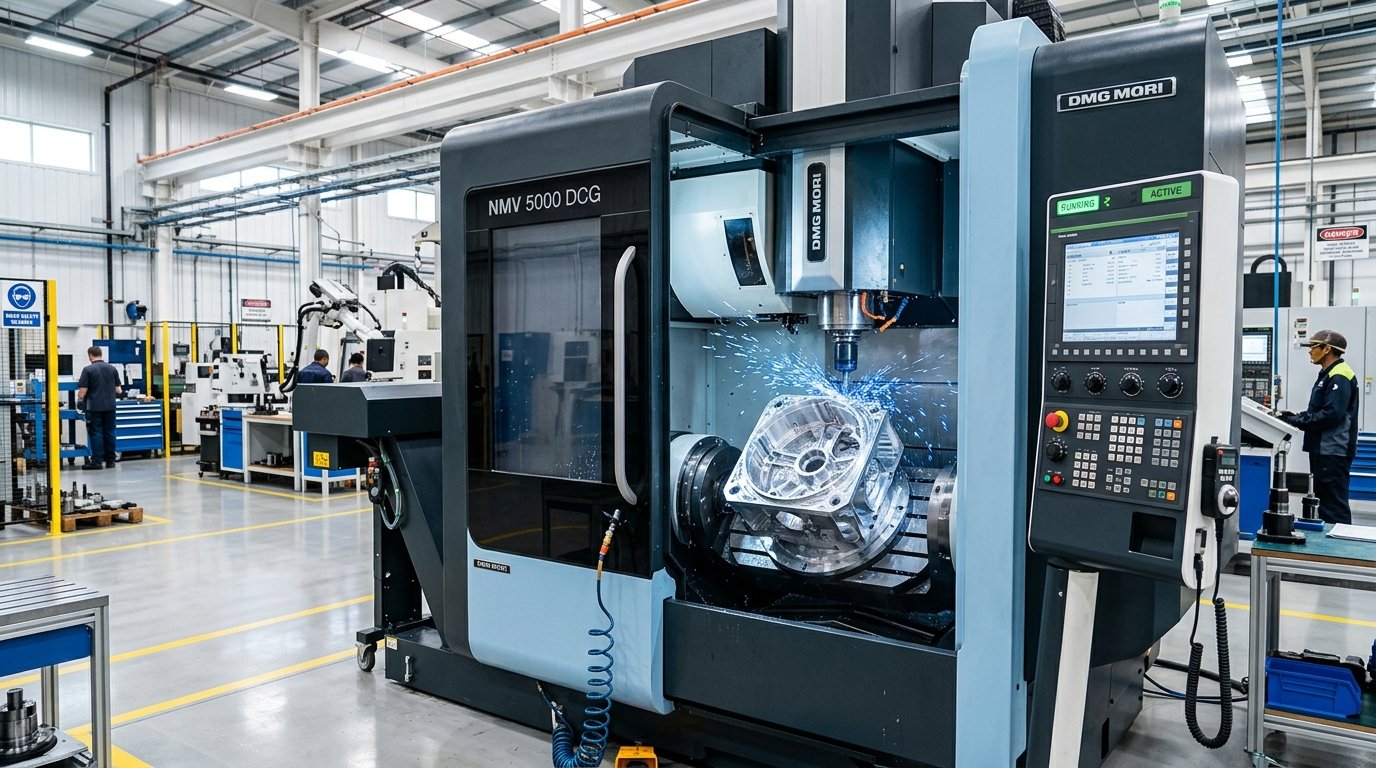
Advanced 5-axis CNC machining centers and a skilled quoting team make it possible to deliver projects quickly and efficiently. Orders are prioritized based on requirements and complexity to keep production timelines fast without compromising quality.
Dedicated technical support is available throughout the entire process—from quotation to final delivery. Questions are answered promptly, and every detail is confirmed to ensure you receive parts that fully meet your expectations.
| Standards | Description |
|---|---|
| Fillet (Radii) | The recommended minimum internal fillet radius is 0.5 mm. Increasing the fillet size—up to 3 mm or more—improves tool accessibility and reduces stress concentrations, enhancing both machinability and overall part strength. |
| Threads and Tapped Holes | External and internal threads can be machined with high precision. Standard thread sizes begin at M1.6. For optimal strength and durability, the thread length should be at least 1.5× the thread diameter. |
| Minimum Wall Thickness |
Metal: Minimum wall thickness of 0.8 mm. Plastic: Minimum wall thickness of 1.5 mm to maintain structural integrity and ensure smooth, stable machining results. |
| Text | Engraved characters should have a minimum height of 2 mm and a depth of at least 0.5 mm to ensure clear, highly readable results after engraving or machining. |
| Holes | The minimum hole diameter is 0.5 mm. For deep holes, maintaining a recommended 1:10 diameter-to-depth ratio helps prevent tool deflection and ensures optimal hole quality. |
CNC turning uses computer-controlled lathes to shape rotating material into precise cylindrical parts. The automated process ensures highly consistent results, making it ideal for detailed features and large production runs. Compared to manual turning, CNC turning is faster, more accurate, and requires less operator involvement, enabling efficient, high-volume manufacturing with minimal deviation.